Tuesday, July 1, 2014

Databricks Raises $33 Million and Introduces Cloud Platform for Processing Big Data

TechCrunch reports that Databricks has raised $33 Million in its Series B Round of Funding. The funding round was led by New Enterprise Associates with participation from previous investor Andreessen Horowitz. Databricks is the commercial entity created by the developers of the open source Apache Spark project. Big data is a big deal and companies want to help customers process the data, so Databricks hopes to simplify the whole matter by transferring it to the cloud to decrease management pains, while speeding it up by utilizing Apache Spark to drive the platform. In addition to the funding, the company also announced a new cloud platform known as Databricks Cloud, which has been designed to simplify big data processing by bringing the process under one cloud umbrella
Databricks, the commercial entity created by the developers of the open source Apache Spark project, announced $33M in Series B funding today and the launch of a new cloud product, their first one as a company.
There is little doubt that big data is a big deal these days and companies are popping up to help customers process the data. Databricks hopes to simplify the entire matter by moving it to the cloud to reduce management headaches, while speeding it up by using Apache Spark to drive the platform.
First, let’s look at the funding, which is led by New Enterprise Associates (NEA)  with a contribution from previous investor Andreessen Horowitz.  It brings the total funding to date to $47M.
The latest round gives the company a huge financial boost and CEO Ian Stoica says, they hope to increase the number of employees and expand rapidly.
In addition to the funding, the company also announced a new cloud platform called Databricks Cloud that Stoica, says has been designed to simplify big data processing by bringing the process under one cloud umbrella.
The cloud solution consists of three pieces: The Databricks Platform, Spark and the Databricks workspace. The idea behind the product, Stoica says, is to provide a single place to process data without having to worry about managing a Hadoop cluster to process your data. It’s all done in the cloud instead in a managed environment.
After you add your data to a project, you can begin working with it immediately. The product has several core concepts starting with Notebooks, which provide a way to interact with the data and build graphs. As you discover ways of displaying your data, you can begin to build dashboards to monitor certain types of data. Finally, the platform includes a job launcher, which enables users to schedule Apache Spark jobs to run at certain times.
The product has been designed to allow customers to access and plug in third-party Spark applications, so if they have additional requirements not available in the base Databricks platform, they can use existing third-party applications to take advantage of whatever those tools have to offer.
The company believes that by providing a set of tools built in the cloud, they will remove much of the pain and complexity involved with a typical big data processing project where so much time is spent simply getting the right tool set in place before any work even gets done.
Initially, Stoica told TechCrunch, the product will run on AWS, but they are looking to expand to Google Compute Engine and Microsoft Azure –and their large infusion of cash should help facilitate that.
The company was born out of the Apache Spark project, which was originally developed by Stoica and colleagues from research at The University of California, Berkeley in 2009. He and his fellow researchers were looking for something that was faster than Hadoop and they developed Spark, which they open sourced in 2010.
Stoica says that it’s faster for a number of reasons including that it requires less code to process the job and it runs entirely in-memory, rather than using disk reads, which can slow down the processing.
While the company continues to support the open source project, last year as Spark was gaining traction, they decided to create a commercial entity on top of that and got $13.7M from Andreessen Horowitz to build the product and the company.
Today marks their debut product. Stoica indicated the platform is available to a limited set of customers today, but they will be expanding that gradually in the coming months.

U.S. Accuses T-Mobile Of Overbilling


WASHINGTON — T-Mobile, which sees itself as a new kind of carrier, now stands accused of an old-fashioned practice — overbilling its customers.
The Federal Trade Commission on Tuesday brought a legal action accusing T-Mobile of illegally earning hundreds of millions of dollars by placing bogus charges on customers’ cellphone bills for premium texting services that the consumers never ordered. Regulators said that T-Mobile had been allowing the third-party charges, and taking a hefty cut of the revenue, since 2009.
The case is one of the largest yet brought by regulators against a major telecommunications company for unauthorized billing, known as “cramming.” The practice has been relatively common for landlines, but recently began to appear on mobile bills.
In T-Mobile’s case, the F.T.C. said, fees for services like “flirting tips, horoscope information or celebrity gossip,” typically were for $9.99, of which 35 to 40 percent went to T-Mobile. In some cases, customers were charged for “years after becoming aware of signs that the charges were fraudulent,” it said.
Jessica Rich, director of the agency’s Bureau of Consumer Protection, said in a briefing that T-Mobile had “ignored telltale signs of fraud” in the charges, harming many consumers.
John Legere, T-Mobile’s chief executive, said in a statement that the F.T.C.’s accusations were without merit.
Also on Tuesday, the Federal Communications Commission said it was investigating T-Mobile’s billing practices after receiving consumer complaints. The commission and the F.T.C. are the two main regulators of the telecommunications industry.
The inquiry and the accusations come at an awkward time for T-Mobile, which has been reported to be in talks with Sprint for a merger that would have to be approved by the F.C.C. T-Mobile has trumpeted itself in its ad campaign as the “Un-carrier” eliminating the things that frustrate customers, like hidden charges and confusing two-year contracts. For its efforts, the company has won praise and millions of customers.
Some of the charges resulted in refunds being given to 40 percent of the customers who asked for them, “an obvious sign to T-Mobile that the charges were never authorized by its customers,” the F.T.C. said.
“It’s wrong for a company like T-Mobile to profit from scams against its customers when there were clear warning signs the charges it was imposing were fraudulent,” said Edith Ramirez, the F.T.C. chairwoman. “The FTC’s goal is to ensure that T-Mobile repays all its customers for these crammed charges.”
In his statement, Mr. Legere said that last year the company stopped allowing third-party companies to impose charges, and last month proactively offered refunds to customers.
“We are disappointed that the F.T.C. has chosen to file this action against the most pro-consumer company in the industry rather than the real bad actors,” Mr. Legere said. “The F.T.C.’s lawsuit seeking to hold T-Mobile responsible for their acts is not only factually and legally unfounded, but also misdirected.”
According to the F.T.C. complaint, filed in federal court in Seattle, T-Mobile told the agency that consumers had authorized the charges. But the agency said the company had shown “no proof of consumers’ doing so.” Commission officials said they had tried unsuccessfully to reach a settlement with T-Mobile.
The F.T.C. is seeking refunds for consumers, and to permanently prevent T-Mobile from engaging in cramming. The commission lacks the power to impose its own fines for charges of consumer fraud, but the F.C.C. has that authority. In the last four years that agency has taken nine enforcement actions against companies for cramming that have totaled more than $33 million in proposed fines.
Consumers would have had a hard time figuring out that they were being charged by T-Mobile for the services, the F.T.C. said, because the company’s online billing statements did not show that the charge was coming from a third party or that it was a recurring payment. Its full-length bills, which often run to dozens of pages, gave more information, but in what was often unintelligible fashion, the agency said.
For example, one type of unauthorized charges appeared on bills with the service listed as “8888906150BmStorm23918,” the F.T.C. said. Consumers who had prepaid phone plans do not receive a bill at all; therefore, the amount was simply deducted from their accounts, according to the agency.
T-Mobile announced in November 2013 that it would no longer allow third parties to bill its customers for premium texting services. When it offered refunds last month to consumers, Mike Sievert, the company’s chief marketing officer, said: “If customers were charged for services they didn’t want, we’ll make it right. That’s being the Un-carrier.”
The F.T.C.’s complaint says, however, that T-Mobile knew in early 2012 that customers were complaining about the charges in increasing numbers and that it had identified several third-party merchants as the subject of those complaints. But, the F.T.C. said, T-Mobile did little to determine whether the customers had authorized the charges.
T-Mobile refused to give some consumers refunds when they asked for them, the commission said, or told them it would block future charges and then failed to do so.

Google Buys Songza, a Playlist Service for Any Occasion

In a sign of growing consolidation in the digital music business, Google announced on Tuesday that it had bought Songza, a three-year-old app that competes with Pandora and others in making customized playlists of recommended songs.
The price was not announced. But a person briefed on the deal, who was not authorized to speak about its terms, said that Google paid more than $39 million for Songza. Representatives of Google and Songza declined to comment on that figure.
Acquiring Songza could help Google improve its ability to offer musical “curation” — the buzzword of the moment in digital music, meaning the ability to generate playlists of songs that are tailored to each user. In the case of Songza, its specialty is a concierge service that matches playlists to particular times of day, or to activities, like working, studying or entertaining at home. A deal with the Weather Channel allows Songza to further tailor its music recommendations to a listener’s current weather conditions.
“We can’t think of a more inspiring company to join in our quest to provide the perfect soundtrack for everything you do,” Songza said in a statement on its website on Tuesday afternoon.
The Songza deal is much smaller than Apple’s recent $3 billion deal for Beats, which along with its line of popular headphones operates a fledgling subscription service whose chief selling point is playlists curated by music experts. Most of that purchase price was attributable to Beats’s lucrative headphones business.
Google said in an announcement that it was not “planning any immediate changes to Songza,” but may begin to incorporate the service into the company’s existing services, like Google Play Music or even YouTube. Google Play Music includes an iTunes-like download store as well as a subscription streaming service, All Access, that competes with Spotify. Barely a year after being introduced, All Access is already available in 28 countries, but music executives complain that its appeal has been limited.
Songza, which offers its playlists free along with advertising, could give Google a ready-made free music service along with expertise in creating playlists.
Introduced in fall 2011, Songza emerged from the ashes of a music download service called Amie Street, whose founders met at Brown University. Songza grew quickly, reporting 5.5 million regular users at the end of last year. Pandora, which has dominated the market for free streaming music, has more than 75 million regular users. Counting investments made in Amie Street, Songza has raised a total of $12 million from investors including Amazon, the William Morris Endeavor talent agency and the music managers Troy Carter and Scooter Braun.
Apple’s purchase of Beats has brought speculation of many further deals among streaming music services, many of which are run by small start-ups with limited budgets. Spotify, one of the sector’s leaders, has 10 million paying subscribers around the world and may be considering an initial public offering of stock.
Last week, Lew Dickey, the chief executive of Cumulus Media, a chain of more than 400 radio stations that owns a 15 percent stake in the streaming service Rdio, predicted in an interview with The Associated Press that “there will be handful of survivors” among such streaming companies.

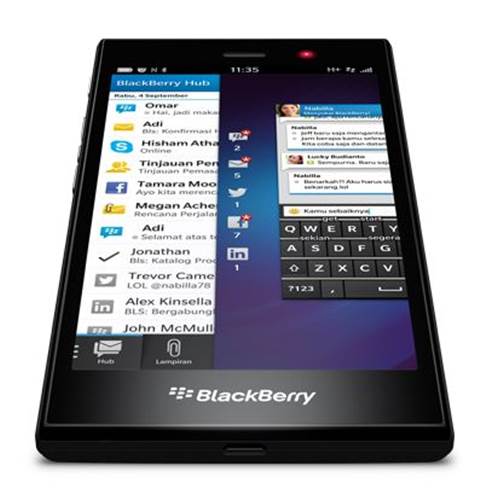
BlackBerry Z3 full review: Good buy for those looking for an upgrade


 Z3-1


The BlackBerry Z3 has a lot going for it and a lot riding on it. It is the most affordable BlackBerry 10 device that could theoretically help the Canadian smartphone maker recreate the success of the Curve 8520 which literally made the once top management phone a household name. But does the phone have the oomph to take on the likes of the Moto G and Nokia 630 which offer good features at slightly cheaper price points?
Quick Tech Specs: 5-inch qHD 540 x 960p display | Dual Core 1.2 GHz Qualcomm MSM8230 processor | 1.5GB RAM | 8GB internal memory, microSD up to 32GB | 5MP rear camera with AF, 1.1MP front camera | micro-SIM (GSM) | 3G, Wi-Fi 802.11 b/g/n, Bluetooth 4 | 2500 mAH battery | BlackBerry OS 10.2.1
Price: Rs 15,900
Design: The Z3 first reminds you of the Z10, the BlackBerry BB10 flagship from last year. Then the Z10 is larger and slightly thicker. But the design language is the same. The phone weighs 164g and it feels good in your hand. The all-black finish and the textured back make the phone look and feel very businesslike. There are four buttons on the left, while a slim flap on the right reveals the SIM and SD card slot.
Screen: The Z3 is a phablet thanks to its 5-inch qHD display. The qHD display is obviously not as good as HD or Full HD, but you would not be able to make out the difference in resolution with at least 720p. Given the price, BlackBerry could have pushed for HD, but the present screen is not going to affect your experience in anyway. And that is what matters. If you need better resolution there is Miracast to beam content to a larger screen.
Performance: Performance is not an issue with this phone at least the way it is meant to be used. Multi-tasking it easy and you have work on a maximum of four apps at the same time. Even with four apps frozen, performance does not lag even a bit. The phone also stays cool most of the time, which is a big help these days.
Memory: The Z3 comes with 8GB internal storage, which is pretty much standard these days in this price range. And you can add extra storage with the SD card. The phone also comes preloaded with BoX, DropBox and Evernote, which add a few gigs between them.
Connectivity: Never a problem with a BlackBerry phone. The Z3 uphold this legacy well.
Software: The Z3 runs the 10.2.1 version of the BB10 OS. There are lot of new features in the OS, most it should have had in the first place if you ask me. But now notifications appear and can be acted upon on top of the app you are on. There is a very Android-inspired pull down settings panel and quick sharing from anywhere.  But what really adds an edge to the OS is its ability to accept most Android apps. A few don’t work on the platform, but those that do plug the biggest gap that buyers have found in this operating system. With the next version of the OS, scheduled to come out in a few months, users will get full access to the Amazon app store too.
Camera: You don’t buy a BlackBerry for its camera, they have always been decent. It performs reasonably well in low light and is good in daylight. Plus, you can click by just touching the screen, which is always welcome in this selfie era.
Battery: The battery can last you a working day on a full charge. For those who don’t use data all the time, the phone could end up squeezing a few more hours of juice.
Verdict: The Z3 definitely has enough features and usability to prevent its loyal users from moving out to other platforms. However, I am not sure the platform offers enough incentives for those on other OS to jump ship. At a lower price point, maybe BlackBerry could have started wooing a lot of people who were looking to buy their first Android powered smartphones. That opportunity seems to have been lost for now.

Familiarize Yourself With Android Wear And Its “Quick Glancing” Benefits


 AH Google IO-1406 Gear Live 3.6


We know it’s still a week or two before people will start receiving their Android Wear smartwatches, at least for those of you that have ordered yourselves an LG G Watch or a Samsung Gear Live. While you’re waiting you’ve probably already read plenty of reviews and checked out people’s hands on opinions and first impressions of both devices, and if you read any of that before placing your order it may have ended up leading you to your decision of which one to get. The way Android Wear works is pretty simple and using it won’t be a difficult thing to do, but it’s always good to have a little handle on things before hand so we’ll aim to give you a quick rundown of how things work.
First of all, Android Wear mirrors the notifications from the device it’s connected to. It’s as simple as that. Past those mirrored notifications it also has Google Now cards integrated, which you’ll get notifications for as well. This includes things like the weather cards or even navigation info, like routes that I use during cycling for example. Cards like that will pop up displaying the appropriate information and then with a quick swipe to the left you can reveal the route on a small image of the map. Swiping  right of course for any notifications will dismiss them on the watch, as well as on the phone it’s connected to. The way notifications work are easy and simplistic, but they may trip people up from time to time at first. From my brief experience with the Gear Live so far, not all notifications can be opened up on the watch, which is OK so long as you make a point to remember which ones you can and can’t readily interact with directly from the watch itself. Hangouts for example will allow you to tap on those mirrored notifications and read most of or all the text within a given message and even a small portion of the prior messages within that thread, and the ability to reply to it afterwards all through the voice typing on the watch. G+ notifications however will simply open up the app on the phone for you to interact with it if you want to leave a comment or a +1 on any posts.
Emails are fully capable of being interacted with through the watch whether it be an initiated email that you send or one that you’re replying to, SMS messages are another story as the notifications “reply” feature will only open up the app when you tap it. That is unless of course you use Hangouts as your default SMS app, then even replying to SMS messages can be done using the voice typing feature. We know that notifications can be a bit daunting especially if you have all of them coming to your watch consistently throughout the day. Dismissing them is easy enough, but the Android Wear application that is installed on your device will give you the ability to blacklist certain apps from mirroring notifications to the watch if you wish. This is called “muting” and will block those notifications from showing up on the watch entirely. Unfortunately this will be the only option for certain apps notifications, but it might be better than having your watch vibrate every few minutes. You can also mute the notification sound for your device if you don’t want it to sound off, which can be helpful if you’ll be interacting with it on the watch anyway. Have any questions about Android Wear? Feel free to leave them in the comments!

Launch: Sony A7s, A77 II and RX100 III


 page-2

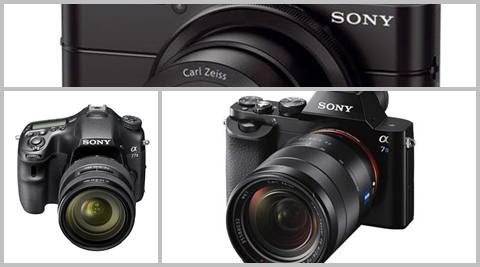
Sony has launched a new range of cameras, right from a new full frame A7S to enntry-level cybershot cameras.
The top of the line camera is the A7S which brings in 4K video quality into the hands of professional photographers and videographers.  Coming in the family of the A7 and A7R, the camera features a new 12.2 effective megapixel 35mm full frame Exmor CMOS sensor paired with a BIONZ X image processor, allowing it to shoot at a sensitivity range of ISO 50 – 409,600. It is also the first model to utilise the entire width of a full-frame image sensor for 4K video.
Priced at Rs 1,54,990, the model will start selling in mid July.
Following on the legacy of the A77, the A77 II bring in enhancements like advanced phase detection autofocus in a tough, weather-resistant body. The A77 II features no less than 79 autofocus detection points, including 15 cross points within most frequently-used central area of the sensor. It will also come with an on-board Wi-Fi that allows one-touch connection with smartphones and tablets.  The A 77 II will be available with various lenses with prices starting Rs 84,990.
Sony has also launched a an update of its popular Cyber-shotTM RX100 camera. The Cyber-shotTM RX100 III comes with an upgraded lens and faster image processor and a retractable OLED Tru-FinderTM with ZEISS T. The camera will have enhanced movie features and a 180-degree tilting LCD. The camera will have a 20.1 effective megapixel back-illuminated 1.0-type Exmor RTM CMOS sensor. The camera is priced Rs 54,900.

Samsung Reveals Galaxy S5 Mini


 Samsung Galaxy S5 Mini

The rumors were true. Samsung today revealed a mini version of its Galaxy S5 flagship smartphone.
The Galaxy S5 mini sports a 4.5-inch, 720-by-1,280 Super AMOLED display, down from the 5.1-inch, 1,920-by-1,080 display on the larger S5. It runs a 1.4GHz quad-core processor (the S5 has a 2.5GHz chip) and Android 4.4 KitKat. It has 1.5GB of RAM and 16GB of internal memory, expandable to 64GB via microSD.
There's an 8-megapixel rear-facing camera with LED flash on the mini, as well as a 2.1-megapixel front-facing shooter, and the usual Samsung photo software.
The device is dust- and water-resistant, and includes features like ultra power saving mode, S Health, and a private/kids mode. Like the S5, meanwhile, the mini also includes the fingerprint and heart rate sensors.
Samsung Galaxy S5 Mini Electric BlueU.S. buyers will have to wait to get their hands on the mini. It will launch in Russia in July before rolling out globally. The device will come in four color options: Charcoal Black, Shimmery White, Electric Blue, or Copper Gold.
A mini version of the Galaxy S5 isn't entirely unexpected. Samsung released a Galaxy S4 Mini last year, which had a 4.3-inch display.
More recently, Samsung released a rugged version of the Galaxy S5. The Samsung Galaxy S5 Active is available on AT&T, while it will be known as the S5 Sport on Sprint.
Yesterday, Samsung also announced four new budget Galaxy devices: the Galaxy Core II, Galaxy Star 2, Galaxy Ace 4, and Galaxy Young 2.

Kindle Fire Case